
My late father collected international police and law enforcement related headgear, and by the time of his death in April 2015, had amassed a respectable collection. His most exotic examples were a Baden Police spike helmet (circa 1900), a plumed Italian Carabinieri (national military police), Thai royal palace guard, Bahaman spiked pith helmet, and an NVA military police pith helmet.
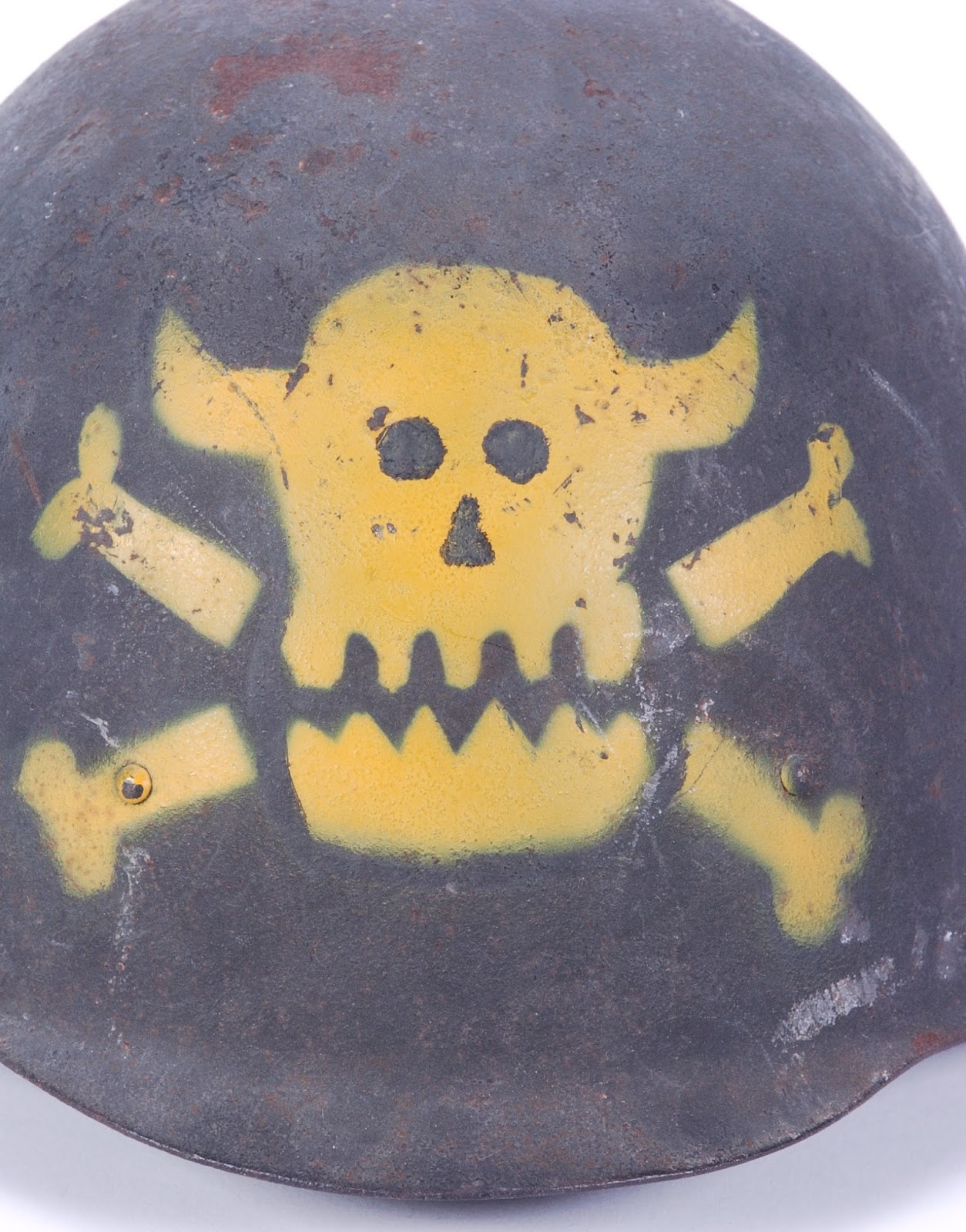 Sometime around 2000 he also acquired at auction, by accident – meaning he was mildly intrigued and happened to win it for the minimum bid, a curious piece outside his usual law enforcement scope. At the time of acquisition, its vague attribution was a Somali death squad helmet. My thought is that it was simply military hardware repurposed by a local militia. Skeptic that I am, though, I’ve always wondered if a finer point may be put on it, and on a whim the other night began to look into it.
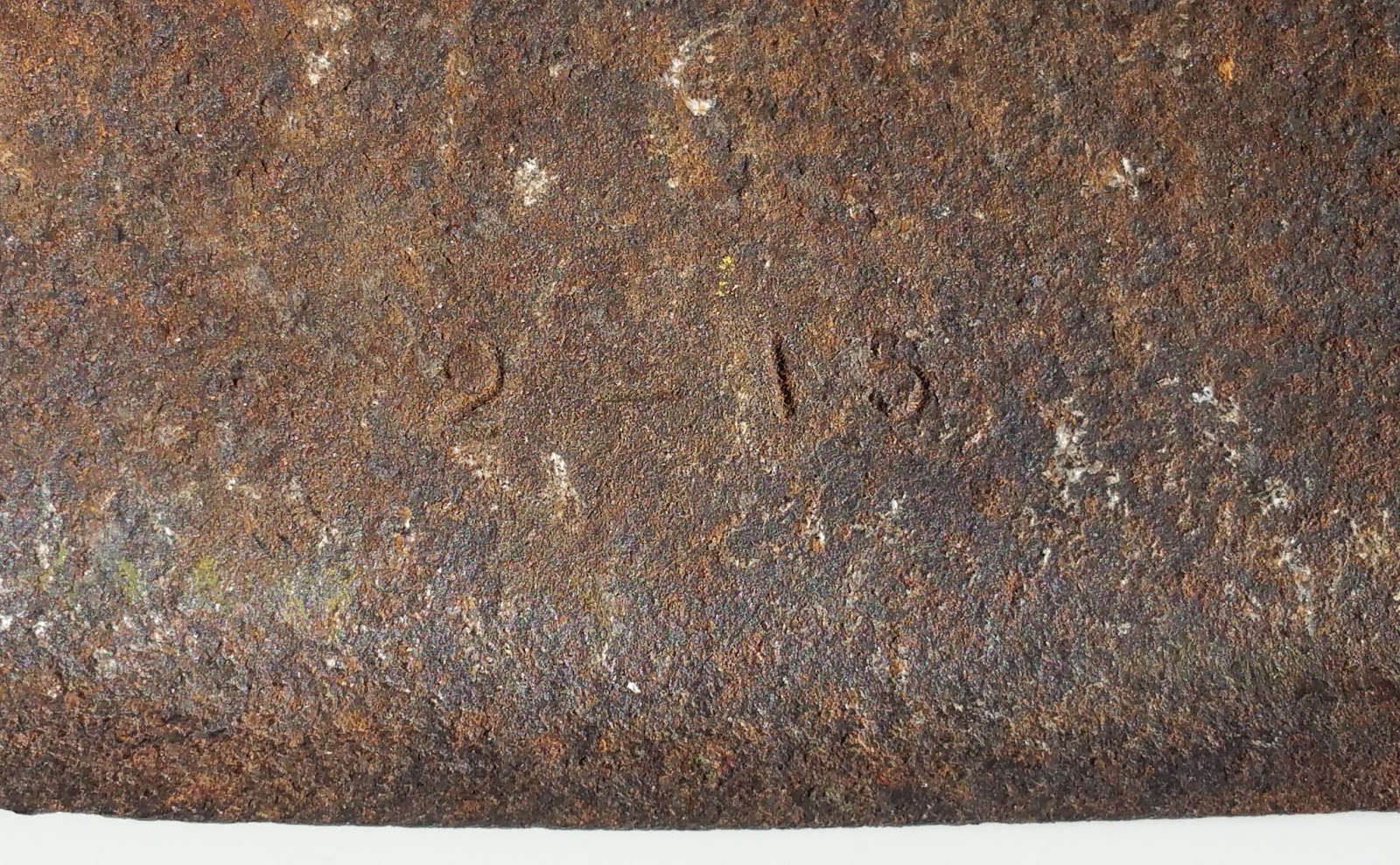
First, the anatomy of the steel helmet: The shell is clearly a stock Soviet M40 style. The liner rivets are copper, which some helmet experts believe point to a North Korean origin, though I cannot confirm it. This particular example lacks the liner, though traces of the steel band remain.
So what of this Somali attribution? Well, let’s check the historical record for clues. The “scramble for Africa” between European powers in the late 19th century saw Britain appeal to Somali Christians, which of course caused friction with their Islamic countrymen, leading them to look to the Ottoman Empire for support.

A series of military victories led by Mohammad Abdullah Hassan helped establish the Dervish state, though it had collapsed by 1920 after British bombardments. Enter Fascist Italy with its La Grande Somalia idea.

Of course with the collapse of Italian power during World War II, the British regained British Somaliland and eventually conquered Italian Somaliland, which became protectorates until the Potsdam Conference of 1949 granted Italy trusteeship over their old portion. Britain retained theirs until 1960.
Did you find this post interesting? Click the dates and months on the Blog Archive side bar to the right for more! Thanks for reading!